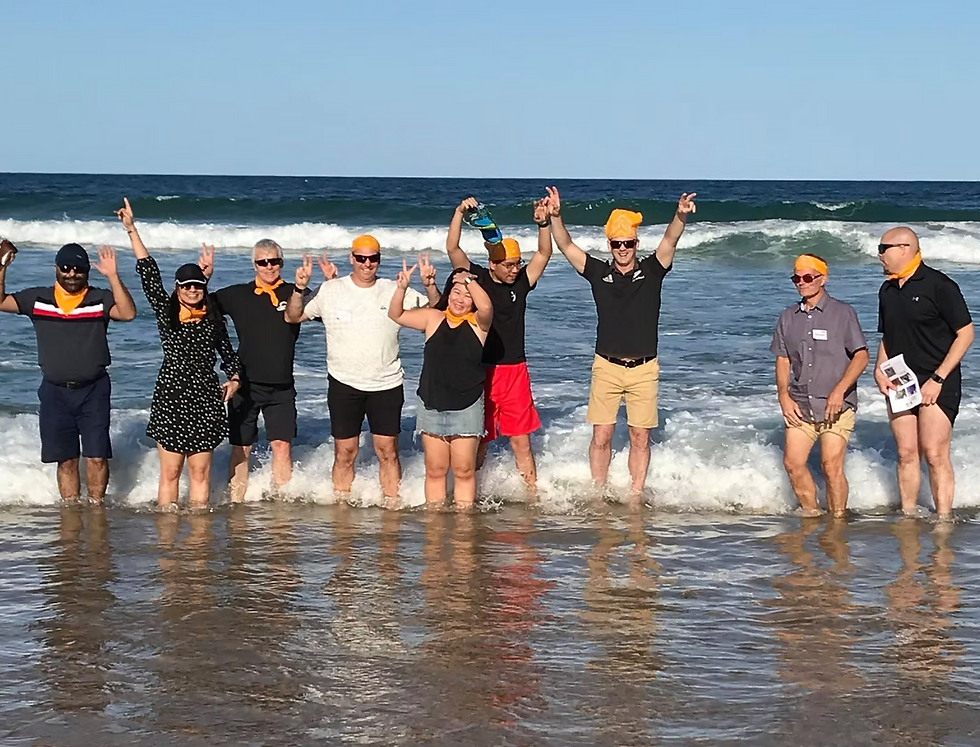
Team Building That Makes a Difference: Street Survivors is a great team building for charity option.
- Jun 8
- 2 min read

Many organisations today are looking for more from their team building activities than just a few hours of fun and engagement. Increasingly, teams want opportunities to connect with a greater purpose and make a positive contribution to the community with team building for charity.
This growing focus on Corporate Social Responsibility (CSR) has seen charity-based team building events become one of the most popular categories of programs we deliver.
One cause that deserves particular attention is homelessness. Unfortunately, homelessness continues to affect a growing number of individuals and families across Australia. While the causes are complex, the need for practical support is immediate.
Our Street Survivors challenge was developed to combine meaningful team development with direct community impact. Inspired by the popular Survivor-style challenge format, teams work together to solve problems, complete activities, and earn resources that are converted into donations for people experiencing homelessness.
The primary items donated are Backpack Beds and care packages, which provide practical support, comfort, safety, and dignity for those sleeping rough. These donations are distributed through our charity partner, Backpack Bed for Homeless, whose frontline networks ensure that items reach those who need them most.
Beyond the charitable outcome, the program creates a powerful shared experience for participants. Teams must communicate effectively, collaborate under pressure, allocate resources wisely, and work towards a common goal. The result is a team building activity that not only develops workplace skills but also leaves participants with a genuine sense of achievement and purpose.
At a time when organisations are increasingly seeking ways to engage employees, strengthen culture, and contribute positively to society, programs such as Street Survivors demonstrate that team building can achieve far more than simply improving workplace relationships.
By helping those who need it most, teams often discover that the greatest rewards come not from what they receive, but from what they give.
About the Author
Talan Miller is Managing Director of Sabre Corporate Development, Australia's team-building specialists since 1988. He has worked with organisations across government, defence, corporate and education sectors throughout Australia and internationally and is regarded internationally as an expert in the field of team building and team development.